Note:
The content of this article was created based on the best available knowledge at the time of publication but may no longer reflect the current state of scientific knowledge. Please refer to the publication date.
We continuously review and update our content.
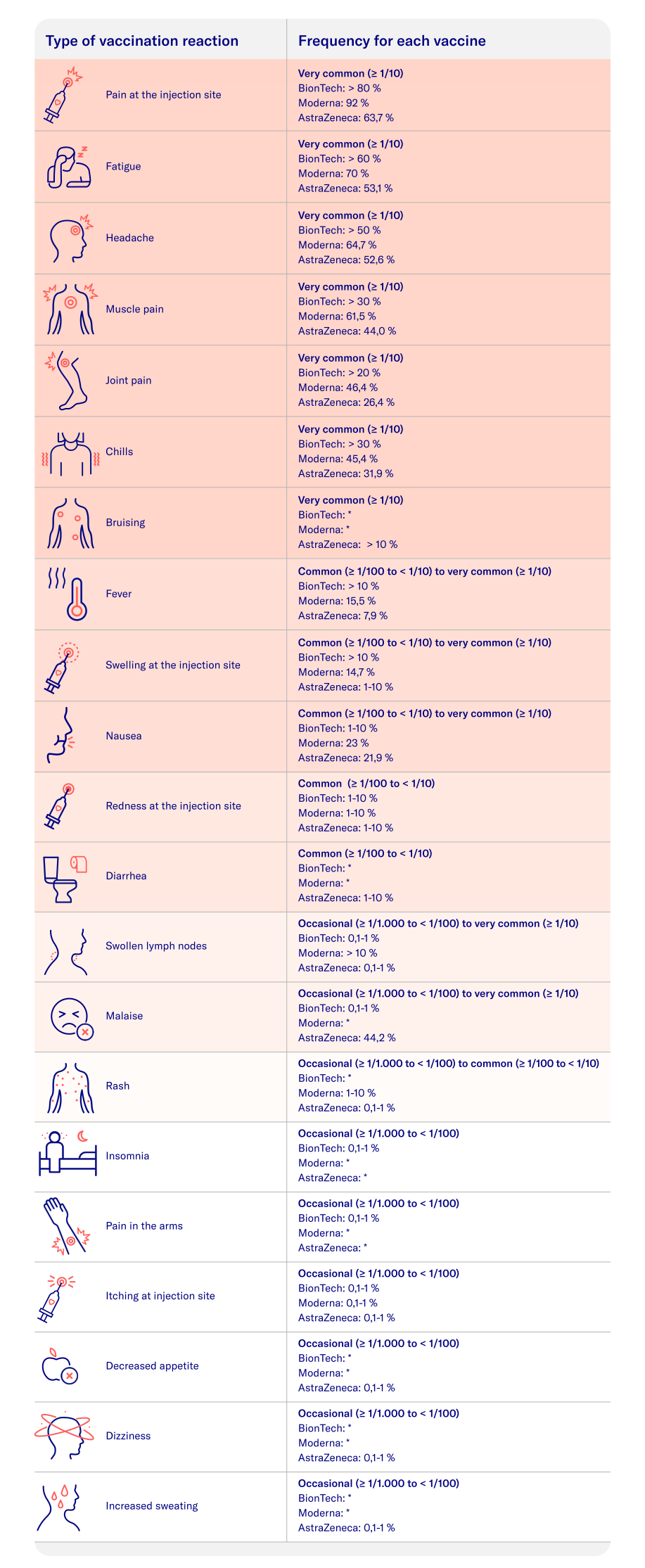
*Data unknown
Serious vaccination reactions (vaccination complications)
Serious vaccination reactions are extremely rare with vaccines licensed in Germany. Almost all potential side effects can be determined in advance with the help of vaccination studies. For very rare (potentially serious) vaccination reactions, however, this is only possible over time.
“Side effects can never be ruled out. Even established vaccines have side effects. It is important to know these exactly. Only then is it possible to make a well-founded decision about who the vaccine is safe for and who has more benefits than risks from vaccination.” [2]
Even after approval, every new vaccine continues to be monitored and researched. For Germany, the Paul Ehrlich Institute (PEI) centrally records all side effects and vaccination reactions. If new COVID-19 vaccine risks are identified, these are published by the Paul Ehrlich Institute. [3] For each vaccine, all side effects are listed in the corresponding product information and continuously updated.
The Standing Committee on Vaccination (STIKO) at the Robert Koch Institute draws up vaccination recommendations based on the data on the efficacy and safety of the respective vaccines so that vaccines can be used optimally. [4]
Data plays a central role in the coronavirus pandemic. They made it possible to develop vaccines in record time. Clinical studies and the analysis of patient data helped to investigate treatments and long-term effects and to share data worldwide. This is how COVID-19 was successfully combated.

The contents of this article reflect the current scientific status at the time of publication and were written to the best of our knowledge. Nevertheless, the article does not replace medical advice and diagnosis. If you have any questions, consult your general practitioner.
Originally published on